Walk any premium supermarket aisle in London, New York, or Dubai and you will notice two labels appearing together on more and more products: Vegan Friendly and Kosher Certified. At first glance, these seem like entirely separate certifications serving entirely separate communities. But for food importers, private label buyers, and retail category managers sourcing internationally, understanding where these two standards overlap — and where they differ — can meaningfully expand your market reach with a single product formulation.
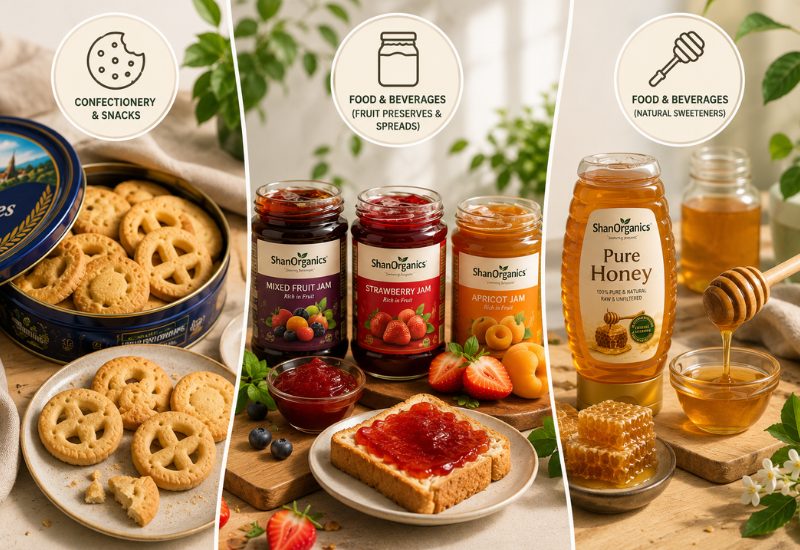
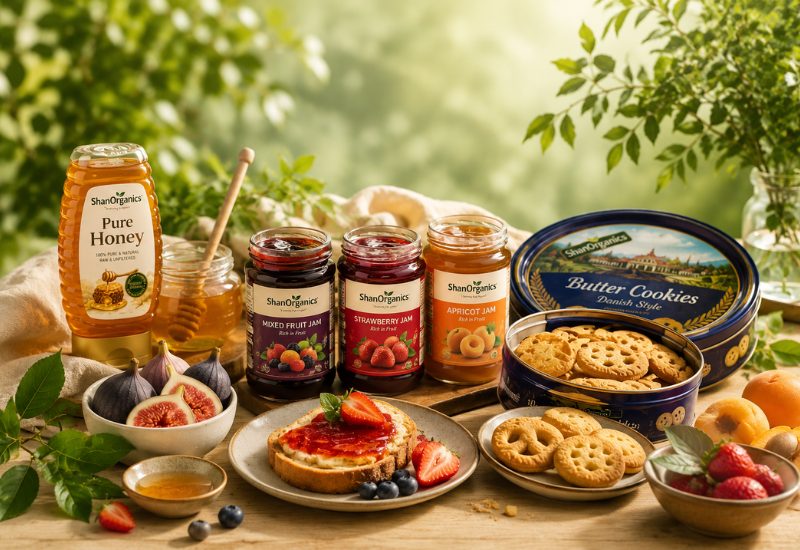
At Ess Pee Quality Products, we manufacture natural honey, Danish style butter cookies, and fruit jams for buyers across 40+ countries. Questions about vegan compatibility and Kosher compliance come up constantly in our conversations with importers, particularly those serving markets in Western Europe, North America, and the Middle East. This article explains both concepts clearly — and shows why a Kosher certified product is often far closer to vegan-friendly than most buyers assume.
What Does "Vegan Friendly" Actually Mean for a Food Product?
Vegan-friendly food products contain no animal-derived ingredients whatsoever. This goes beyond simply avoiding meat. A product must exclude:
- Meat, poultry, and seafood
- Dairy in all forms — milk, butter, whey, casein, lactose
- Eggs
- Honey (under strict vegan definitions)
- Gelatin (derived from animal bones and skin)
- Animal-derived colourings such as Carmine (E120), which comes from crushed cochineal insects
- Certain emulsifiers derived from animal fats (E471 in some forms, E542)
There is no single global regulatory body that governs the term “vegan.” Unlike Kosher or Halal, “vegan friendly” is typically self-declared or certified by third-party bodies such as The Vegan Society (UK), BeVeg (USA), or V-Label (Europe).
Why "Vegan Friendly" Is a Commercial Claim, Not Just an Ethical One
The global vegan food market was valued at over $26 billion in 2023 and continues to grow at approximately 10% annually. More importantly for B2B buyers: mainstream consumers who are not strictly vegan are actively seeking plant-based or plant-forward products. “Vegan friendly” on packaging signals clean ingredients, minimal processing, and transparency — attributes that resonate far beyond the committed vegan consumer.
For private label buyers launching a product in Western European supermarkets, a vegan-friendly claim can be the difference between shelf placement in the standard category versus the premium or free-from aisle — with meaningfully higher retail price points.
What Does Kosher Mean — And What Does Kosher Certification Actually Require?
Kosher is a Hebrew word meaning “fit” or “proper.” Kosher dietary laws, derived from Jewish religious texts, govern which foods are permitted and how they must be prepared. The core principles relevant to food manufacturers are:
Permitted animal categories (Kosher):
- Animals that have split hooves and chew their cud (beef, lamb — when slaughtered correctly)
- Fish with fins and scales
- Certain birds
What Kosher prohibits:
- Pork and pork derivatives in any form
- Shellfish and crustaceans
- Mixing of meat and dairy products in the same product or meal
- Gelatin from non-Kosher animals
- Certain insect-derived ingredients (including Carmine E120)
- Blood — requiring specific slaughter and preparation methods
What Kosher certification additionally requires:
- Supervision by a qualified Kosher certifying authority (a Mashgiach or recognized body)
- Strict separation of meat and dairy production environments
- Use of Kosher-certified equipment and ingredients throughout the supply chain
Kosher Categories — Meat, Dairy, and Pareve
The most commercially important Kosher category for food manufacturers is Pareve (also spelled Parve). A Pareve product contains no meat and no dairy. It is neutral — it can be consumed with either meat or dairy meals under Jewish law.
Fruit jams, honey, most cookies made without dairy butter, and plant-based spreads can all qualify as Pareve — making them extraordinarily versatile for Kosher-observant consumers.
Where Vegan Friendly and Kosher Compatible Actually Overlap
Here is where the overlap becomes commercially significant. Consider the shared prohibitions:
Ingredient | Vegan Excludes | Kosher (Pareve) Excludes |
|---|---|---|
Carmine / E120 (insect dye) | ✓ | ✓ |
Gelatin (animal-derived) | ✓ | ✓ (non-Kosher source) |
Lard / animal fat | ✓ | ✓ |
Blood or blood products | ✓ | ✓ |
Pork derivatives | ✓ | ✓ |
Non-Kosher dairy (Chalav Stam in some views) | ✓ (all dairy) | Partially |
A product that is Kosher Pareve certified — that is, it contains no meat and no dairy — will already exclude most of the ingredients that concern vegan consumers. The primary remaining gap is honey.
The Honey Question — Vegan vs. Kosher
Honey is a fascinating edge case. Under strict vegan philosophy, honey is excluded because bees are living creatures and honey is an animal product. However, honey is one of the most widely Kosher-certified products in the world — bees are classified differently under Kosher law, and honey itself is considered Pareve.
This means: a Kosher certified honey is not automatically vegan-friendly. A buyer targeting both communities would need to source a plant-based honey alternative (typically agave syrup or rice syrup labelled as “vegan honey alternative”) or position the two certifications separately for different SKUs.
For all other product categories — cookies, jams, fruit spreads — the Kosher Pareve certification effectively covers the major vegan concerns simultaneously.
What This Means for Private Label Buyers and Importers
If you are sourcing products for a retail chain in the UK, Germany, Australia, or North America, the practical takeaway is this:
A product manufactured to Kosher Pareve standards — with no carmine, no animal-derived gelatin, no lard, no hidden animal fats — is already very close to vegan-compatible. With minor formulation adjustments (primarily replacing dairy butter with vegetable fat alternatives in cookies, and confirming colour and flavour sources), a Kosher certified product can often simultaneously carry a vegan-friendly claim.
This dual positioning is highly valuable for importers because it expands addressable market from a religious minority (Jewish consumers) to a fast-growing mainstream consumer segment (vegan and plant-based shoppers) with no duplication of manufacturing complexity.
What to Ask Your Manufacturer
When evaluating whether a Kosher certified product can also carry a vegan claim, ask:
- Is the Kosher certification Pareve (no meat, no dairy)?
- What is the source of emulsifiers used (E471, E472 etc.)?
- Are colours certified free of insect-derived sources (specifically E120 Carmine)?
- Is the flavouring system natural and plant-derived?
- Is gelatin used anywhere in the process or product?
At Ess Pee Quality Products, our Kosher-certified cookie and jam ranges are manufactured on dairy-free lines using vegetable-based fats and natural colour systems — making dual vegan-Kosher positioning achievable for private label buyers with minimal reformulation.
How Aspire International Supports Vegan-Friendly and Kosher Compatible Sourcing
Our facility in Mohali, India holds Kosher certification across our cookie and honey ranges. Our fruit jam spreads are formulated with natural colours (Beetroot Red E162, Beta-Carotene E160a) and natural flavourings — no Carmine, no artificial azo dyes, no animal-derived thickeners.
For private label buyers looking to launch a product simultaneously targeting Kosher-observant and vegan-leaning consumers — a growing dual-positioning strategy in premium supermarket categories globally — we welcome a conversation about formulation, labelling, and certification documentation.
Request free product samples or download our certification documents at esspees.com.
Conclusion
Vegan-friendly products and Kosher compatible products share more common ground than most buyers realise. For importers and private label brands looking to serve multiple consumer communities from a single certified manufacturer, understanding this overlap is a commercial advantage.